Bepanthene (WOUND HEALING)

Quick links to important sections
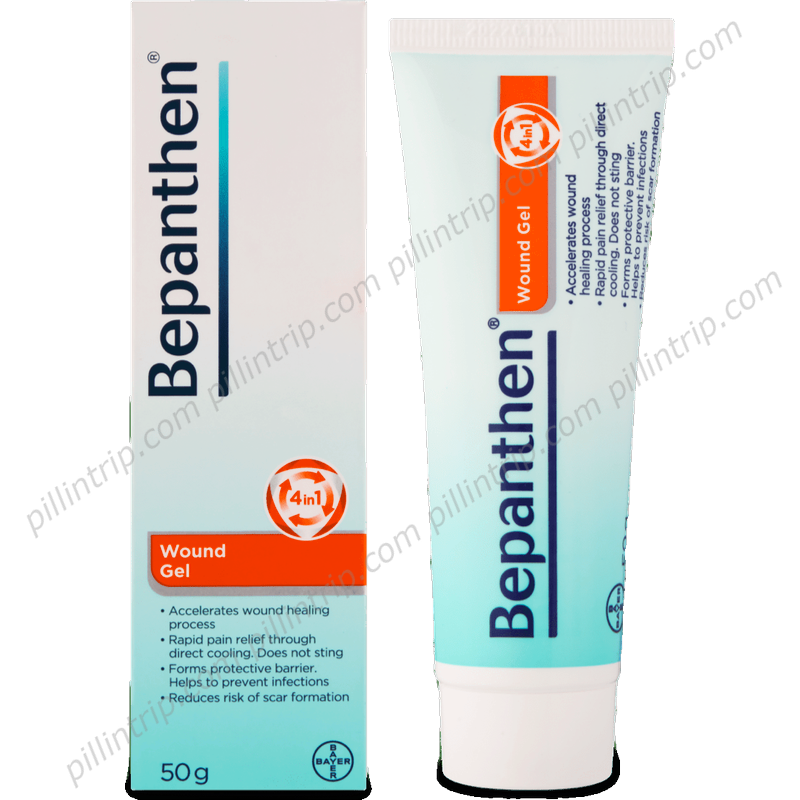
Bepanthene (WOUND HEALING)

Selected form

Medically reviewed

Laura Arias

Last updated on 22/12/2025

This page provides general, reference-level information compiled from official medical sources. It is not a substitute for professional medical advice, diagnosis, or treatment. For decisions about your health, please consult a qualified healthcare professional.

Overview of Bepanthene (WOUND HEALING)

Property Description
Active ingredient Dexpanthenol (D-panthenol)
Form Topical cream or Ointment
Pharmacological class Provitamin B5 analogue and Topical Protectant
Common use Supporting skin healing and regeneration
Origin Synthetic derivative of a natural vitamin

What Type of Medicine is Bepanthene (WOUND HEALING)?

Bepanthene is a medicinal preparation primarily classified as a topical protectant and emollient designed to support the skin's natural healing process. It belongs to the pharmacological class of Provitamin B5 analogues, which reflects its core chemical function in the body. The preparation is generally available for dermal application as an Over-the-Counter (OTC) product and is clinically recognized for its role in maintaining skin integrity, making it a common choice for managing minor skin irritations.


Dexpanthenol: Composition, Origin, and Forms

The active ingredient in Bepanthene is Dexpanthenol, a synthetic derivative of Pantothenic acid (Vitamin B5). Dexpanthenol is categorized as a Provitamin because it requires conversion by the skin's cells into the biologically active vitamin before it can support cellular function. A key differentiating factor is the product's exclusive use of the D-form, ensuring maximum efficacy, as only Dexpanthenol is metabolically functional in humans.

The product is supplied as either a topical cream or a denser ointment. Both forms are designed for localized delivery, and research confirms that the ingredient can be readily absorbed through the skin, where it supports re-epithelialization and acts as a moisturizing humectant.


What is the General Purpose of Bepanthene?

The general purpose of Bepanthene is to promote and accelerate the natural process of re-epithelialization and improve the quality of wound healing for minor skin concerns. The Provitamin mechanism supports the proliferation of new, healthy skin cells, aiding in the rapid recovery of the protective surface. The preparation functions to reinforce the natural skin barrier function by maintaining essential moisture and providing the precursor required for cellular regeneration.

What side effects are possible with Bepanthene (WOUND HEALING)?

Possible side effects and safety information

The safety profile for the topical preparation containing Dexpanthenol is defined by a low documented incidence of adverse reactions, with most events relating to local skin sensitivity. The official regulatory classification for the occurrence of side effects is generally Rare, meaning these effects are observed in fewer than 1 in 1,000 users, based on official regulatory data.


Documented Adverse Reactions

The adverse effects reported in official regulatory documents belong primarily to two system-organ classes:

  • Skin and Subcutaneous Tissue Disorders: The most commonly reported events are localized, and include rash, itching (pruritus), hives (urticaria), redness, irritation, and a burning sensation at the application site.
  • Immune System Disorders: The product carries a documented, though rare, risk of allergic reactions (hypersensitivity).

Serious Adverse Reactions and Safety Constraints

Official safety documentation notes the potential for very serious allergic reactions, which are rare but require recognition. Signs of a systemic reaction may include swelling of the face, lips, tongue, or throat, along with respiratory symptoms such as difficulty breathing or tightness in the chest.

Use of the preparation is strictly contraindicated in any individual who has a known allergy or hypersensitivity to the active ingredient, Dexpanthenol, or to any other component (excipient) in the specific formulation.


Population-Specific Safety Notes

The safety information addresses use in specific populations. Regulatory statements confirm that the product may be used during pregnancy and by nursing mothers during lactation. A specific safety note advises against applying the cream or ointment over a large surface area when breastfeeding.

Overdose and Emergency Response

Overdose Map: Overdose and when to seek help — official regulatory information for Bepanthene (WOUND HEALING)

Overdose Scope

Element Official Regulatory Statement
Documented overdose presentations Overdose is generally considered Not Applicable for excessive use or absorption via the skin, according to some regulatory documents. No specific systemic manifestations are documented for the topical product.
Physiological systems affected (as stated in label) No systemic physiological effects are explicitly listed in official labeling for topical overdose. Concern is focused on gastrointestinal distress following accidental ingestion.
Dose-related or exposure-related factors (if applicable) Risk is primarily associated with accidental ingestion of the product, not high-dose or frequent dermal exposure.
Population-specific overdose notes (if applicable) The mandated emergency response is directed at mitigating the risk associated with accidental ingestion in children.
Emergency-response statements (as written in official documents) Get medical help or contact a Poison Control Center right away.
When immediate medical help is required (label-derived phrasing only) If swallowed.

Overdose Classifications (High-Level)

Classification Official Regulatory Statement
Severity classification (as defined in official documents) The profile reflects a low systemic risk for the intended route of administration.
Regulatory basis (EMA / FDA / etc.) Based on: FDA/DailyMed OTC Labeling for emergency actions and EMA/National SmPC for topical risk classification.
Overdose-context constraints (as defined in official documents) Overdose concern is constrained to oral ingestion of the product.

Resulting Overdose Structure

Official overdose statements:

  • Overdose is documented as Not Applicable following dermal application of the cream or ointment.
  • If swallowed, an official regulatory action is mandated.
  • Immediate action involves seeking medical help or contacting a Poison Control Center right away.
  • No specific antidote or detailed procedural steps are described in the official label.

Connection to the overall overdose profile (2–4 sentences): Official regulatory documents define the overdose profile for this topical preparation as having a minimal systemic risk via the dermal route. The primary condition under which urgent medical help must be sought is exclusively tied to the accidental oral ingestion of the product, particularly concerning the pediatric population. This structure establishes the mandated action to contact a Poison Control Center as the core regulatory instruction for managing potential overdose.

Therapeutic Uses of Bepanthene (WOUND HEALING)

Bepanthene is commonly used in situations involving certain distressing symptoms and is relevant in clinical settings that involve acute or disruptive symptom patterns of the skin, where short-term symptomatic assistance is needed. The core therapeutic utility is reflected in its classification as a skin protectant. It is applied across therapeutic domains to address symptom clusters that may become intense or disruptive. The product generally plays a role in managing conditions requiring superficial skin repair following minor cuts, scratches, and abrasions; it helps manage symptoms related to localized irritation, such as redness and soreness from chafing or mild sunburn; and it is relevant in conditions characterized by pronounced dryness and roughness. For these uses, symptomatic relief is generally sought.

“It is commonly used to provide supportive relief that may assist patients with easing the patient's experience of temporary skin discomfort and maintain functional stability.”


  • Quick Fact: Relief for Localized Discomfort The cream is commonly used to help with diaper rash in infants and for symptomatic relief and support of sore nipples in nursing mothers, and may assist with supporting functional stability in these specific contexts.

Regulatory References

  1. NIH DailyMed official drug label

Eligibility and Restrictions for Use

Eligibility Map: Who can and cannot use Bepanthene (WOUND HEALING) — Official Regulatory Information

This information describes which populations are officially eligible to use Bepanthene (containing dexpanthenol) or related wound healing products, based on governmental regulatory documents.


Eligibility Scope

Populations for whom use is contraindicated:

  • Hypersensitivity: Individuals with a known allergy or hypersensitivity to the active substance (dexpanthenol) or any other ingredient (excipient) in the specific product formulation must not use the medicine.
  • Antiseptic Formulations (e.g., Bepanthen Plus): Use is additionally contraindicated on a perforated eardrum and for wounds that are deep, serious, or highly contaminated.

Age-Related Eligibility:

  • General Use: The product is generally considered suitable for use by adults and children across all age groups for minor skin and mucous membrane injuries.

Pregnancy and Lactation:

  • Status: Bepanthene may be used during pregnancy and breastfeeding.
  • Restriction: When using products containing an antiseptic (like Bepanthen Plus), application over a large surface area should be avoided. For breastfeeding, the product must be fully removed from the nipple area before nursing.

What should I know about interactions with other medicines?

Interactions with other medicines and products

Official regulatory information for topical dexpanthenol (the active ingredient in Bepanthene WOUND HEALING) consistently states that the product has no known drug-drug interactions.

This profile is directly linked to the preparation's dermal route of administration, which results in minimal-to-negligible systemic absorption. Regulatory authorities classify the product as having no known or clinically significant interactions across major categories of co-administered substances.


Official Interaction Statements

Interaction Domain Regulatory Stance for Topical Formulation
Interacting medicinal products None listed in official regulatory labeling.
Contraindicated combinations No substances are designated as prohibited for co-administration.
Pharmacokinetic effects No documented interactions that alter drug exposure (e.g., changes in AUC or clearance).
Timing constraints No mandatory time separation from other products is required.
Interactions with Food/Alcohol None explicitly documented by regulatory authorities.

Connection to the Overall Interaction Profile

The official interaction profile for Bepanthene is structurally defined by the documented absence of interactions across all major regulatory domains. This status is based on the localized action of the drug. Consequently, official government labels do not impose any contraindications or co-administration restrictions based on the risk of drug-drug interactions.

Mechanism of Action

Powering Cellular Repair and Metabolism

The active ingredient, Dexpanthenol (a provitamin), acts as a pro-drug by readily converting into Pantothenic Acid (Vitamin B5), an essential building block for Coenzyme A (CoA). Increased CoA availability supports the rate of metabolic activity, providing the necessary energy and structural lipids to support cell division and proliferation .


Supporting Skin Barrier Structure

This mechanism involves enhancing the synthesis and organization of essential skin lipids within the stratum corneum. By contributing to the formation of the lipid-rich extracellular matrix and acting as a humectant, the molecule helps form and stabilize the skin's physical barrier, leading to improved moisture retention and better tissue integrity.


Modulating Tissue Remodeling and Migration

The molecule modulates intracellular signals to promote the proliferation (multiplication) and migration (movement) of crucial repair cells, specifically keratinocytes and fibroblasts. This activity supports the process of re-epithelialization, resulting in the coverage of the superficial tissue defect and the formation of new tissue.

Dosage and Administration Information

Administration Protocol for Dexpanthenol 5% Topical

The general principles for using Bepanthene, which contains 5% dexpanthenol, are centered on a flexible, topical application pattern. The product is consistently supplied as a cream or ointment containing 5.0 grams of dexpanthenol per 100 grams of preparation.


Administration Scope

Feature Guideline
Route of Administration For Cutaneous use only, applied directly to the outer skin layer.
Dosing Regimen A thin layer of the 5% formulation is applied. The amount is determined by the size of the affected area and is not based on a fixed unit dose.
Frequency Pattern Application occurs once to several times daily or as required.
Specific Population Scheduling For infants, the product is applied at each nappy change. For nursing mothers, application is scheduled after each breast-feeding.

Resulting Procedural Structure

The standard application protocol requires that the affected skin area must be cleansed prior to the use of the topical preparation. The product is then applied and should be rubbed in gently with a light massage. A key procedural condition for nursing mothers is the requirement to cleanse the product from the breast before the next feeding session. The duration of use is typically determined by the clinical scenario, generally continuing as needed until the condition is resolved.

This established administration protocol establishes a high-level, localized, and event-dependent usage model for the topical preparation.

Recent Clinical Evidence

Research Evidence / Overview of Studies for Bepanthene (WOUND HEALING)

Research Evidence for Superficial Skin Repair

Research related to Dexpanthenol, the active ingredient in Bepanthene, research has explored the application of Dexpanthenol in the context of the natural repair process of the skin. This includes studies exploring how symptoms change over time in various formulations applied in studies examining settings involving minor damage, such as abrasions or areas of temporary irritation. The evidence base includes a combination of small-scale clinical studies, laboratory research, and human volunteer experiments. These studies monitored outcomes related to functional imbalance and outcomes related to the skin's integrity. The overall evidence landscape contributes to understanding symptom patterns associated with minor skin repair.


Evidence for Use in Diaper Rash

Research examined the use of Dexpanthenol preparations in managing diaper rash in infants and neonates. The studies primarily used Randomized Controlled Trials (RCTs) and comparative designs. In these trials, researchers monitored clinical grading scales for redness and irritation, as well as objective measures of skin barrier function.

Findings describe patterns observed in the studies over follow-up periods, typically lasting up to four weeks. The product was studied in trials exploring its role in the prevention and supportive management of mild-to-moderate irritation in this specific population. While this research contributes to the broader evidence landscape, existing evidence provides limited insight into managing severe or complicated cases of diaper rash. Additionally, long-term outcomes following extended use in this population are not fully established.


Evidence for Use in Minor Cuts, Scratches, and Abrasions

The research base for minor cuts, scratches, and abrasions includes small-scale human studies using controlled injury models, as well as laboratory investigations. These research scenarios explored short-term symptom changes and focused heavily on measuring surrogate outcomes. For example, laboratory studies examined metrics of cell proliferation and activity—the skin cells critical for repair.

Reported measurements from these research settings describe patterns related to measurements related to the rate of wound closure and metrics of cell proliferation and activity over defined time intervals. Human studies typically focused on the acute phase of healing, with observation periods generally lasting one to two weeks. Because the research often relies on models rather than large-scale clinical outcomes for spontaneous injuries, the data contribute to the broader evidence landscape but data are still emerging regarding complex minor injuries.

Key Studies & References

  1. Dexpanthenol Ointment / Skin Protectant Drug Label Information (DailyMed)

Frequently Asked Questions (FAQ)

Common questions about Bepanthene (WOUND HEALING) (FAQ)


Q: What is the difference between Bepanthene Ointment and Bepanthene Cream formulations?

Both the cream and the ointment contain the same active ingredient, Dexpanthenol. The formulations primarily differ in their excipients, which are the inactive ingredients. This difference affects the consistency, lipid (fat) content, and the type of preservatives used in each preparation.


Q: Is Bepanthene (WOUND HEALING) the same product as the Bepanthene Nappy Rash Ointment?

According to official documentation, both preparations are based on the same active ingredient, Dexpanthenol 5%, which supports skin healing. However, regulatory labeling treats them as separate product lines, and their specific excipients may vary.


Q: Is Bepanthene (WOUND HEALING) a steroid cream or does it contain steroids?

Official classification states that Bepanthene (WOUND HEALING) is defined as a Provitamin B5 analogue (Dexpanthenol) and a Topical Protectant. It does not belong to the pharmacological class of corticosteroids (steroid creams).


Q: Does Bepanthene contain any added perfumes, colorants, or preservatives?

Regulatory composition lists detail all excipients (inactive ingredients), which can include preservatives such as Phenoxyethanol in the cream formulation. Specific product formulations may vary in their inclusion of other additives.


Q: Is Bepanthene suitable for treating small kitchen or mild thermal burns?

The product is indicated for the supportive treatment of minor skin injuries. Studies and official information indicate that some related formulations are officially indicated for the treatment of minor burns, which are defined as superficial skin injuries.


Q: Is it okay to use Bepanthene on skin that is broken, or only on intact skin irritations?

The product is indicated for minor skin defects such as cuts, scratches, and abrasions. However, regulatory documents state that antiseptic formulations should not be used on deep, serious, or highly contaminated wounds.


Q: Can I use Bepanthene for dry, cracked skin on my hands or feet?

The mechanism of action involves the active ingredient acting as a humectant and supporting the skin's barrier structure. This function, described in regulatory documentation, aids in improved moisture retention and overall tissue integrity.


Q: Is the 'Plus' version of Bepanthene the one that contains an antiseptic ingredient?

Official product information indicates that specific formulations, such as Bepanthen Plus, contain an additional antiseptic ingredient. This ingredient is often Chlorhexidine, which is included for its antiseptic properties.


Q: What is the difference in action between Bepanthene and a basic barrier moisturizer?

The key difference is that the active ingredient, Dexpanthenol, acts as a pro-drug. It converts into Pantothenic Acid to support cell metabolism and the proliferation of repair cells. This goes beyond the purely physical barrier function of basic moisturizers.


Q: Is it normal for a wound to feel slightly itchy or warm after applying the ointment?

Itching (known as pruritus) and a burning sensation at the application site are documented as possible adverse reactions in regulatory safety information. These effects are reported as rare.


Q: Can Bepanthene be used on the delicate genital area of infants?

According to the official administration protocol for infants, the product is used for application after each nappy change. This usage context includes the delicate skin of the nappy area.


Q: Is it okay to apply Bepanthene and then use sunscreen on the same area of skin?

Regulatory documents state that the topical preparation has no known clinically significant drug-drug interactions. Authorities also impose no mandatory time separation from other products.


Q: Does Bepanthene interact with antiseptic washes or soaps used to clean wounds?

Official information confirms there are no known drug-drug interactions for the topical preparation. Furthermore, the product’s administration protocol requires the affected area to be cleansed prior to its application.


Q: What is the recommended shelf life of the tube once it has been opened for the first time?

Official regulatory labeling indicates that the product should not be used past the specified post-opening period. This duration varies by formulation but typically ranges from 3 months to 1 year.


Q: Is Bepanthene designed to create a protective, breathable layer over the skin?

The preparation is officially classified as a topical protectant. Its function is to reinforce the natural skin barrier by supporting tissue integrity and improving moisture retention.


Q: Is there a distinction between how Bepanthene is used for prevention versus treatment?

Official research evidence, particularly concerning diaper rash, supports the product’s role in both the prevention and the supportive management of mild-to-moderate irritation in that population.


Q: Can Bepanthene be used on old scars, or is its effect primarily for new wound regeneration?

The primary regulatory mechanism of action supports the proliferation of repair cells and the process of re-epithelialization. This action relates to the formation of new tissue to cover a superficial defect.


Q: Does Bepanthene work on insect bites and stings?

While the general wound healing formulation may not explicitly list this use, official information indicates that some specific antiseptic formulations are indicated for the treatment of minor insect bites and stings.


Q: Why do people commonly use Bepanthene for tattoo aftercare?

The product's mechanism of action includes supporting cell proliferation and re-epithelialization. This biological process is similar to the skin recovery required after superficial injuries, including certain cosmetic procedures.


Q: Does the lanolin content in the ointment pose any potential concerns for sensitive skin?

The ointment formulation contains wool fat (lanolin) as an excipient. The product is contraindicated for use by individuals who have a known hypersensitivity or allergy to the active substance or any other component in the formulation.


Q: Can people with known nut allergies safely use the product that contains almond oil?

The ointment formulation contains refined almond oil as an excipient. Regulatory safety information contraindicates the product for individuals with a known allergy or hypersensitivity to the active substance or any other component in the specific formulation.


Q: Why does the package label warn about avoiding contact with the eyes and mucous membranes?

Official regulatory documents designate the product for cutaneous use only (application to the outer skin layer). Furthermore, antiseptic formulations are specifically contraindicated for wounds on mucous membranes, such as a perforated eardrum.


Q: Does Bepanthene work to reduce the likelihood of scabbing on cuts and scrapes?

The product promotes the formation of new, healthy skin cells (re-epithelialization) and supports tissue integrity. This underlying biological process is part of the biological process that supports effective wound closure.

How should Bepanthene (WOUND HEALING) be stored and disposed of?

Official Storage and Disposal Requirements

Storage of Bepanthene topical preparations must strictly follow regulatory guidance to maintain stability and ensure safety.


Storage Conditions

The product must be stored at or below 25 C to 30 C, depending on the specific formulation. It is mandatory to protect the medicine from freezing and excessive heat.

  • Child Safety: Keep the medicine out of the sight and reach of children.
  • Stability: Do not use the product after the printed expiry date or beyond the specified post-opening period (typically 3 months to 1 year).

Disposal Instructions

Medicines must not be disposed of in wastewater or household waste. Official regulatory instructions require individuals to ask a pharmacist how to dispose of any unused or expired product to comply with environmental protection rules.

Attention! Always consult to a doctor or pharmacist before using pills or medicines.

Available in countries:

Equivalent of Bepanthene (WOUND HEALING) found in:

A-Z Index: