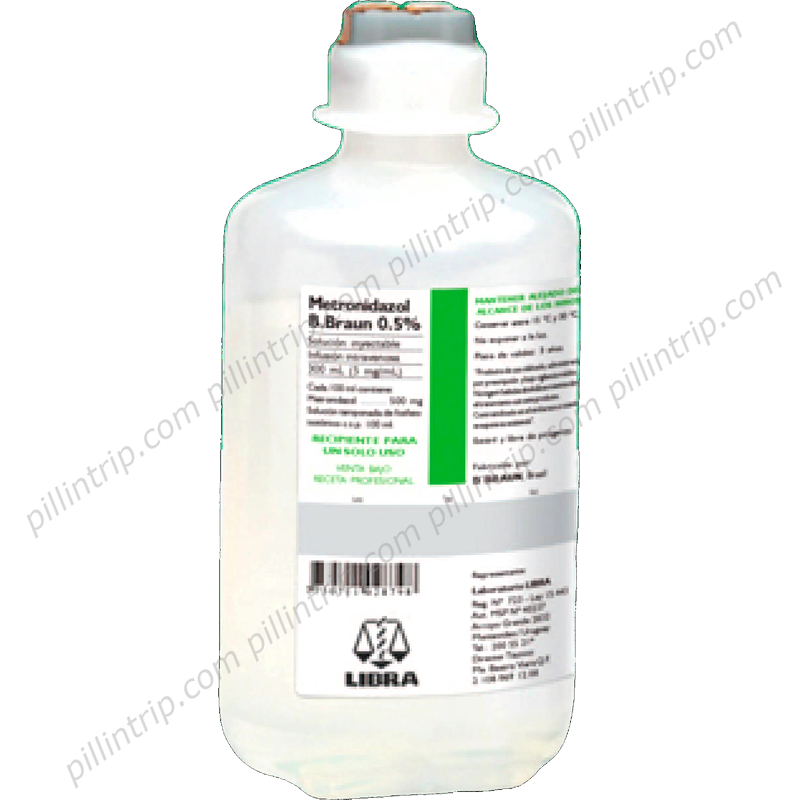
B.Braun Metronidazole

Quick links to important sections

Medically reviewed

Laura Arias

Last updated on 22/12/2025

This page provides general, reference-level information compiled from official medical sources. It is not a substitute for professional medical advice, diagnosis, or treatment. For decisions about your health, please consult a qualified healthcare professional.

Overview of B.Braun Metronidazole

The B.Braun product containing the active substance Metronidazole is a foundational injectable medication used in hospital settings. B.Braun is recognized globally as a major supplier of sterile, high-quality intravenous solutions. This section defines the product’s nature, classification, and general purpose, distinguishing the intravenous form used for acute care.

Property Description
Active ingredient Metronidazole
Form Sterile Intravenous Solution
Pharmacological class Nitroimidazole Antimicrobial
Common use Systemic treatment of susceptible infections
Origin Synthetic Compound

What Type of Medicine is B.Braun Metronidazole?

B.Braun Metronidazole is a synthetic, prescription-only therapeutic agent classified as a nitroimidazole antimicrobial. This medication is clinically recognized for its essential dual action, operating as both a potent antibiotic and an antiprotozoal agent. The drug's active ingredient, Metronidazole, is a chemical entity specifically designed to target and eliminate pathogens, such as anaerobic bacteria and protozoa, which are known to flourish in low-oxygen environments throughout the body. Its general therapeutic goal is the systemic eradication of these pathogens to resolve associated infections.


Composition and Form: The Intravenous Solution

This specific B.Braun product is distinguished by its formulation as a sterile, single-ingredient aqueous solution designed exclusively for parenteral administration via intravenous infusion. The composition features the Metronidazole active ingredient dissolved in an appropriate carrier, such as Water for Injection, alongside necessary buffering salts and excipients. Delivered intravenously, this preparation guarantees rapid and reliable drug distribution, which is a key requirement for achieving necessary concentrations in acute and deep-seated systemic infections.


How Does Metronidazole Generally Achieve Its Purpose?

The drug operates through a process of selective toxicity. It is administered as an inactive prodrug that only becomes biologically active through a process called reductive activation, which takes place predominantly inside the targeted anaerobic bacteria and protozoa. This highly reactive, activated substance then exerts a bactericidal effect by damaging the pathogen's DNA and essential cellular components, ensuring the organism’s destruction and the efficient clearance of the systemic infection.

Regulatory References

  1. NIH Metronidazole Overview

What side effects are possible with B.Braun Metronidazole?

Possible side effects and safety information

Official regulatory documentation classifies the potential adverse effects and safety profile of Metronidazole intravenous solution based on frequency and affected system-organ class. The most commonly reported adverse reactions are referable to the gastrointestinal system, including nausea, vomiting, abdominal cramping, and an unpleasant metallic taste.


Serious Adverse Reactions and Systemic Constraints

Adverse effects listed under less frequent categories include clinically significant reactions affecting the Nervous System and the Blood and Lymphatic System. Serious adverse reactions documented in regulatory sources include encephalopathy, convulsive seizures, peripheral neuropathy (paresthesia/numbness), and aseptic meningitis. The official safety profile also highlights the potential for Severe Cutaneous Adverse Reactions (SCARs), such as Stevens-Johnson Syndrome (SJS) and Toxic Epidermal Necrolysis (TEN).


Population and Duration-Related Safety Notes

The label includes specific safety constraints for certain patient populations. Use is generally contraindicated in individuals with Cockayne Syndrome due to the documented risk of severe acute hepatic failure. Monitoring of adverse events is recommended for patients with severe hepatic impairment and End-Stage Renal Disease (ESRD) due to potential drug metabolite accumulation. The risk of peripheral neuropathy and leukopenia has been associated with prolonged administration of Metronidazole. Furthermore, the official label includes a carcinogenicity warning based on findings from animal studies, mandating that the medicine should be reserved only for indicated conditions.

Overdose and Emergency Response

Overdose and when to seek help

The official regulatory profile for Metronidazole overdose describes initial manifestations that may include nausea, vomiting, and neurological signs such as ataxia and mild disorientation. The major documented risks associated with high doses or prolonged overexposure involve the central nervous system. These severe outcomes include convulsive seizures, peripheral neuropathy, and serious conditions like encephalopathy and subacute cerebellar syndrome.

A critical, population-specific risk noted in regulatory labeling is the potential for severe irreversible hepatotoxicity and acute liver failure, particularly in patients with Cockayne syndrome. Because of these serious outcomes, regulators mandate that patients must immediately report any symptoms of potential liver injury or the onset of abnormal neurological signs, and promptly discontinue therapy to seek urgent medical attention.

The treatment for massive overdose is defined as symptomatic and supportive. Regulatory documents explicitly state that no specific antidote is known for Metronidazole overdose. However, hemodialysis is documented as a procedure that can effectively remove a significant amount of the drug, removing 40% to 65% of the dose in a typical session.

Therapeutic Uses of B.Braun Metronidazole

B.Braun Metronidazole intravenous solution is considered a relevant therapeutic option in acute clinical settings, primarily used to help address infections caused by specific susceptible pathogens: anaerobic bacteria and certain protozoa. This injection is used to treat serious infections across various body systems.

Management of Systemic and Deep Anaerobic Illnesses

This medication is generally used to help address symptom clusters that may become intense or disruptive due to severe, deep-seated anaerobic infections, such as septicemia, intra-abdominal abscesses, and pelvic inflammatory disease (PID). It is applied across domains where additional symptomatic support is needed. The key patient benefit is that it contributes to maintaining functional stability by managing the infectious cause, which supports easing the load of symptoms related to systemic imbalance.

Supportive Management for Specific Gut-Related Illnesses

B.Braun Metronidazole is relevant in conditions characterized by periods of heightened symptoms in the gut, including severe C. difficile colitis and systemic amebic infections. In these scenarios, the infusion is commonly used when short-term symptomatic assistance is needed to control debilitating diarrhea and associated abdominal distress. This therapeutic action supports general well-being during symptomatic phases and may assist with maintaining functional stability.


Summary: Support for Systemic Discomfort

Metronidazole IV is commonly used to help manage acute symptoms related to systemic imbalance, such as high fever and chills, when caused by susceptible deep-seated anaerobic bacterial infections. Its application is relevant for managing symptoms that interfere with daily functioning in critical care settings.

Regulatory References

  1. NIH MedlinePlus Drug Information

Eligibility and Restrictions for Use

B.Braun Metronidazole eligibility is strictly determined by specific contraindications and required risk assessments, as documented in official regulatory labeling.

Populations Excluded or Restricted

Classification Who Must NOT Use (Contraindicated) Conditional Use/Monitoring Required
Allergy/Condition Hypersensitivity to metronidazole or nitroimidazole derivatives; diagnosis of Cockayne Syndrome (due to risk of severe, fatal hepatotoxicity). Severe Hepatic Impairment (dose reduction often required); Active CNS Disease; Impaired Haematopoiesis; End-Stage Renal Disease (monitoring advised).
Physiological State Alcohol consumption during and for at least 48-72 hours after therapy; use within two weeks of taking disulfiram. Pregnancy (generally avoided in the first trimester, use restricted to essential cases); Breastfeeding (not recommended; nursing should be suspended for a period after use).
Age Groups None are absolutely contraindicated based on age alone. Newborns with a gestational age less than 40 weeks require serum concentration monitoring due to potential accumulation.

What should I know about interactions with other medicines?

B.Braun Metronidazole has officially documented interaction patterns based on regulatory labeling, primarily affecting hepatic metabolism and drug clearance. The medication is strictly contraindicated with specific substances.

Co-administration with alcohol (ethanol) and products containing propylene glycol is prohibited, requiring abstinence during therapy and for at least three days after the final administration due to the risk of a severe disulfiram-like reaction. The combination with Disulfiram is also contraindicated due to the reported risk of central nervous system toxicity.

Metronidazole is classified as an inhibitor of CYP450 enzymes, particularly CYP2C9. This pharmacokinetic interaction can lead to reduced clearance and elevated plasma concentrations of co-administered drugs. For instance, Metronidazole officially potentiates the effect of Warfarin and other oral coumarin anticoagulants, increasing the risk of bleeding. Other agents whose systemic exposure is officially documented to increase include Busulfan, Lithium, Ciclosporin, and Fluorouracil.

Conversely, some medications, such as the anticonvulsants Phenobarbital and Phenytoin, are documented to accelerate Metronidazole's hepatic metabolism, resulting in reduced Metronidazole plasma concentrations. Interaction severity may be magnified in patients with severe hepatic dysfunction, as documented in the regulatory information.

Mechanism of Action

The action of metronidazole is defined by selective toxicity, exploiting unique metabolic pathways within susceptible pathogens. The mechanism relies on an environmental prerequisite—a low-oxygen, low-redox potential—found exclusively within the target organisms, such as obligate anaerobic bacteria and certain protozoa.


Reductive Activation of the Prodrug

Metronidazole is administered as an inactive prodrug that must be chemically reduced to become cytotoxic. This activation occurs when electron-transport proteins (like ferredoxin) within the pathogen donate an electron to the drug's nitro group. This step is critical as it produces the highly reactive nitro free radical anion which is the molecule's active, destructive form. The resulting physiological effect is the localized generation of the toxic compound, which is contingent upon the internal environment of the microbial cell.


Irreversible DNA Damage and Pathogen Destruction

The reactive free radical intermediates immediately attack essential cellular structures. Their primary target is the pathogen's DNA, where they cause non-specific damage, including strand breakage and loss of structural integrity. This molecular damage inhibits the pathogen's capacity for replication and DNA repair. The killing of the susceptible organism (bactericidal/protozoacidal effect) represents the final physiological consequence of this destructive cascade.


Mechanistic Constraints: Oxygen Competition

The mechanism is physiologically constrained by the presence of oxygen ( O2), which competitively diverts the electrons needed for metronidazole's activation, a process known as futile cycling. This constraint explains why the destructive mechanism is functionally limited to organisms that can sustain the necessary low-oxygen, low-redox potential.

Dosage and Administration Information

B.Braun Metronidazole is administered strictly as a sterile intravenous infusion in a hospital or acute care setting. The official instructions for this formulation govern the administration route, dosage calculation, frequency, and duration of the treatment course, all based on body weight.


Administration Scope

Feature Official Instruction
Route of Administration Restricted exclusively to Intravenous Infusion (IV).
Dosing Schedule Treatment begins with an initial loading dose of 15 mg/kg, followed by a maintenance dose of 7.5 mg/kg.
Frequency Maintenance doses are administered at a fixed interval, typically every six hours (q6h).
Course Duration The standard course usually lasts 7 to 10 days, but may be extended up to 21 days for certain severe infections.

Procedural Requirements

The intravenous solution requires specific procedural adherence. The Metronidazole solution must be administered by slow infusion, with each dose delivered over a period of 30 to 60 minutes. The commercially available IV solution is officially prohibited from having other medications added to the container. Furthermore, infusion equipment containing aluminum must be avoided during administration.

Population-Specific Use

A mandatory dose reduction is required in patients diagnosed with severe hepatic impairment due to slower drug metabolism. For patients undergoing hemodialysis, the dosing schedule must be adjusted, often requiring a supplementary dose after the dialysis session. Dosing for pediatric patients is also calculated based on body weight and age.

Recent Clinical Evidence

B.Braun Metronidazole: Overview of Clinical Evidence

Evidence for use in Serious Anaerobic Bacterial Infections

The research base for B.Braun Metronidazole in treating serious anaerobic infections involves numerous clinical trials, including both randomized and non-randomized studies. This research primarily explored the medication's use in systemic and deep-seated conditions like abdominal abscesses and septicemia. The studies monitored key outcomes, including evidence of the observed change in infection status and the status of systemic symptoms. A key limitation is that much of this foundational data is older, and the medication was often evaluated as part of a combination treatment, resulting in limited data regarding the drug's patterns when used alone.

Evidence for use in Clostridium difficile Colitis and Protozoal Infections

Research into C. difficile colitis includes meta-analyses that consolidate data from multiple randomized controlled trials (RCTs). These studies were designed to evaluate the observed change in infection status over the short-term and the tracking of recurrence frequency following treatment. Findings regarding initial status change can be mixed, particularly when assessing patients with more severe manifestations of the condition. For systemic protozoal infections like amoebiasis, the use of this medication has been studied and is noted in long-established clinical studies. These trials tracked outcomes related to the observed change in parasite status and related physical symptoms.

Research Gaps and Special Populations

Evidence in special populations, such as pediatric patients and older adults, typically focuses on describing the drug's physiological processing and metabolite patterns, rather than large-scale efficacy trials. Studies explore how the drug is handled in groups with hepatic or renal impairment. What remains uncertain is the full extent of long-term effects. The available evidence for acute infections primarily involves short-term follow-up, and long-term data for recurrence remains limited.

Key Studies & References Entamoeba histolytica Infection - StatPearls - NCBI Bookshelf (Supporting evidence for protozoal use and historical context)

Frequently Asked Questions (FAQ)

Common questions about B.Braun Metronidazole (FAQ)

Q: What is B.Braun Metronidazole used for?

According to the official product information, B.Braun Metronidazole is used to treat serious infections caused by specific types of bacteria called anaerobes. This includes conditions such as bloodstream infections (sepsis), infections of the brain, bones, joints, and soft tissue, and preventing infection during certain surgeries.

Q: How is B.Braun Metronidazole given to a patient?

Regulatory documents state that B.Braun Metronidazole is administered directly into a vein. This process is known as an intravenous infusion and is typically given slowly over a period of at least 20 minutes.

Q: Can B.Braun Metronidazole affect liver function?

Official information indicates that Metronidazole is mainly processed by the liver. Therefore, caution is generally advised when this medicine is given to patients with severe liver impairment, as this can affect how the drug works in the body.

Q: Is Metronidazole safe to use during pregnancy?

Studies and official information indicate that B.Braun Metronidazole is generally not recommended for use during the first trimester of pregnancy. In the second and third trimesters, regulatory information indicates that its use must be based on a careful assessment of the potential benefits and risks by a healthcare professional.

Q: Should I avoid alcohol while being treated with Metronidazole?

Official product information advises that alcohol consumption should be avoided during treatment with Metronidazole and for at least 48 hours afterward. The combination can lead to an unpleasant reaction known as the disulfiram-like effect, which includes symptoms like flushing, vomiting, and a rapid heart rate.

Q: Does Metronidazole interact with blood thinners?

Regulatory documents confirm that Metronidazole can affect the action of certain blood-thinning medicines, specifically those related to warfarin or coumarin-type anticoagulants. When used concurrently, the blood thinner's effect may be increased, requiring appropriate monitoring of the patient's blood clotting time.

How should B.Braun Metronidazole be stored and disposed of?

Storage and Disposal for B. Braun Metronidazole Injection

The storage of Metronidazole Injection must adhere strictly to officially documented regulatory requirements.


Storage Conditions

This medication must be stored at Controlled Room Temperature (CRT), maintained between 20 C and 25 C (68 F to 77 F). The individual container must be stored in the outer carton to protect from light until it is ready for use. Regulatory labeling specifies that the solution is for single use only. Furthermore, adding additives into the container is prohibited to preserve the solution's integrity.


Disposal and Handling

Any unused portion must be discarded immediately after the required amount is administered. The disposal of the container and any unused contents must follow established local and national waste disposal requirements for pharmaceutical products. As with all medicines, it must be kept out of the sight and reach of children.

Attention! Always consult to a doctor or pharmacist before using pills or medicines.

Available in countries:

Equivalent of B.Braun Metronidazole found in:

A-Z Index: