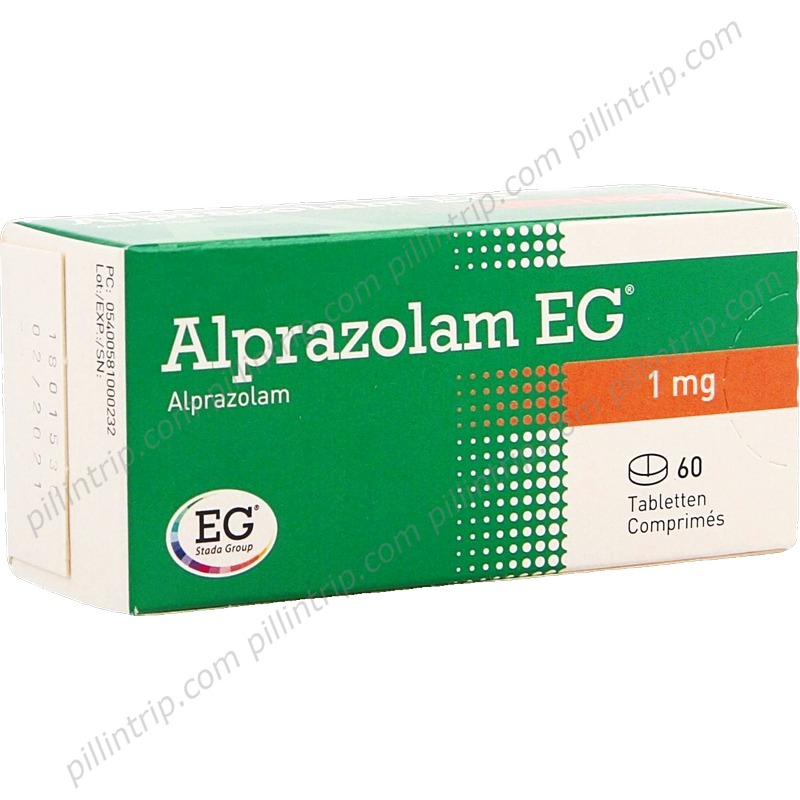
Alprazolam EG

Quick links to important sections

Medically reviewed

Laura Arias

Last updated on 22/12/2025

This page provides general, reference-level information compiled from official medical sources. It is not a substitute for professional medical advice, diagnosis, or treatment. For decisions about your health, please consult a qualified healthcare professional.

Overview of Alprazolam EG

Property Description
Active ingredient Alprazolam
Form Oral tablet
Pharmacological class Benzodiazepine
Origin Synthetic chemical compound
General purpose To induce calmness and reduce tension

Alprazolam EG is a synthetic pharmaceutical preparation that contains the single active ingredient Alprazolam, a substance chemically categorized as a triazolobenzodiazepine compound. Pharmacologically, Alprazolam belongs to the Benzodiazepine class, agents that function as Central Nervous System (CNS) depressants. This specific preparation is marketed under the 'EG' identifier, confirming its distribution through the relevant manufacturer channels.

Benzodiazepines act primarily as depressants of the CNS by enhancing the effect of gamma-aminobutyric acid (GABA). The medicine’s key action is to boost the brain's natural inhibitory signaling, a mechanism observed in pharmacological research.

The medicine is manufactured in the physical form of an oral tablet, intended for the oral route of administration. The active substance is described as a triazolo analog of the 1,4 benzodiazepine class. As a prescription-only medicine (POM), Alprazolam EG is distinguished from non-prescription anxiolytics and is subject to regulated dispensing, underscoring its pharmacological potency and CNS-depressant effects.

The general purpose of Alprazolam’s action is to provide a sense of calmness and promote generalized mental rest. By enhancing GABA function, the drug directly dampens overexcited nerve pathways, which is typically used to manage acute feelings of heightened tension and general nervousness.

Regulatory References

  1. NIH Drug Information

What side effects are possible with Alprazolam EG?

Possible Side Effects and Safety Information

Official regulatory documents classify the risks associated with Alprazolam EG to ensure a clear understanding of its safety profile.

Serious Warnings and Risks

The FDA mandates a Boxed Warning highlighting the risks of abuse, misuse, addiction, and physical dependence. Life-threatening withdrawal reactions, including seizures, can occur if the medicine is stopped abruptly after continued use. Concurrent use with opioid medications carries a serious risk of profound sedation, respiratory depression, coma, and death.

Common Adverse Reactions

Adverse reactions reported frequently in controlled clinical studies (Common, meaning ge 1/100 to <1/10) are primarily related to the central nervous system. These include drowsiness, light-headedness, and changes in coordination (ataxia). Other common effects may involve dry mouth and fatigue.

Adverse Reactions Grouped by Body System

Side effects are often categorized by the body system affected (System Organ Class). Common categories involved include:

  • Nervous System Disorders: Drowsiness, sedation, memory impairment, dizziness.
  • Psychiatric Disorders: Depression, confusion, disorientation, and uncommonly, paradoxical reactions such as hostility or rage.
  • Gastrointestinal Disorders: Constipation, increased/decreased salivation.

Safety Restrictions and Contraindications

Alprazolam EG should not be used in individuals with a known hypersensitivity to alprazolam or other benzodiazepines. It is also contraindicated for concurrent use with strong inhibitors of the CYP3A enzyme, such as certain antifungal agents (e.g., ketoconazole, itraconazole), due to the potential for significantly increased effects.

Population-Specific Safety

Special caution is required for the elderly due to increased sensitivity to the sedative effects. Use during pregnancy (Pregnancy Category D) may cause fetal harm, and late-stage exposure can result in neonatal sedation and withdrawal syndrome in the newborn. Patients with pre-existing hepatic or renal impairment may require dosage adjustments due to slower clearance of the drug from the body.

Overdose and Emergency Response

The official regulatory documents define the overdose profile of Alprazolam based on the potential for severe Central Nervous System (CNS) depression. Overdose manifestations are documented as a progression from milder signs to serious outcomes, with treatment being primarily supportive.

Documented Overdose Manifestations

Classification Official Regulatory Description
Mild to Moderate Signs Drowsiness, confusion, impaired coordination (ataxia), reduced reflexes, and slurred speech
Life-Threatening Outcomes Profound sedation, respiratory depression, coma, and death

Required Emergency Action

Seek immediate medical attention is the mandated action for severe symptoms or suspected overdose. This requirement is due to the documented risk of fatal respiratory depression and profound CNS impairment.

Overdose management is specified as primarily symptomatic and supportive treatment, which includes necessary airway management and monitoring of vital signs. Flumazenil, a specific antagonist, is documented as available, though its use is subject to specific regulatory caution due to potential associated risks.

High-Risk Overdose Contexts

Official labeling highlights the significantly increased risk of severe outcomes, including death, when Alprazolam is used concomitantly with opioids. Furthermore, altered drug metabolism is noted as a consideration in geriatric patients and those with impaired hepatic or renal function.

Therapeutic Uses of Alprazolam EG

What Alprazolam EG Treats: Main Uses and Benefits

Alprazolam EG is commonly used in situations involving certain distressing symptoms. It is applied across domains where additional symptomatic support is needed, relevant in conditions characterized by periods of heightened symptoms related to pervasive worry, and conditions associated with acute or disruptive episodes of intense fear.


Easing Symptoms and Supporting Stability

This medication helps address symptom clusters that may become intense or disruptive, such as symptoms related to heightened physiological activity, intense worry, muscle tension, and signs of increased neurological activity. It supports general well-being during symptomatic phases and may help patients cope more steadily with symptom fluctuations. It is relevant in contexts marked by increased discomfort or tension, applied when symptoms create noticeable functional strain.


Quick Fact: Relevant for Acute Symptom Manifestations

Alprazolam EG is relevant for easing symptoms related to heightened physiological activity. It is commonly used when short-term symptomatic assistance is needed, applied in scenarios where symptoms become temporarily overwhelming, or relevant in contexts involving heightened systemic burden.

Regulatory References

  1. NIH DailyMed label for Alprazolam tablet

Eligibility and Restrictions for Use

The official regulatory profile for Alprazolam EG defines eligibility primarily through a set of strict contraindications and age limitations.

Populations for Whom Use is Prohibited (Contraindicated)

Contraindication Basis for Exclusion
Hypersensitivity Known allergy to alprazolam or other benzodiazepine medicines.
CYP3A Inhibitors Concomitant use with strong inhibitors of the CYP3A enzyme (e.g., ketoconazole, itraconazole), which significantly raises the drug's concentration.
Specific Conditions Patients with acute narrow-angle glaucoma, myasthenia gravis, or severe hepatic (liver) or severe respiratory insufficiency.

Age and Physiological Restrictions

  • Children and Adolescents: Use is not recommended in children and adolescents under 18 years of age because the safety and efficacy have not been established in this population.
  • Pregnancy and Lactation: Use during pregnancy should be assessed for risk of neonatal sedation and withdrawal syndrome, and it is not recommended during breastfeeding.
  • Specific Impairments: Caution and dose adjustment are required for geriatric patients and those with mild to moderate hepatic or renal impairment, or chronic respiratory insufficiency, as their ability to process the drug is reduced. The medicine is restricted to the adult population (18 years and older).

What should I know about interactions with other medicines?

Alprazolam EG has formally documented interactions with several other medicines and substances, primarily due to its reliance on the Cytochrome P450 3A (CYP3A) enzyme for metabolism and its inherent Central Nervous System (CNS) depressant activity.

Officially Restricted Combinations

Co-administration with potent CYP3A inhibitors such as Ketoconazole and Itraconazole is officially contraindicated by regulatory authorities due to the significant risk of increased drug exposure. Additionally, the co-administration of Alprazolam with Opioids is subject to a serious regulatory warning because the combination results in additive CNS depressant effects, increasing the risk of profound sedation and respiratory depression.

Metabolic and Exposure-Altering Medicines

The plasma concentration of Alprazolam is highly susceptible to modification by other medicines. Inhibitors of the CYP3A enzyme, including Nefazodone and Fluvoxamine, are documented to increase the body's exposure to Alprazolam. Conversely, medicines that act as CYP3A inducers, such as Carbamazepine and the herbal product St. John's Wort, are documented to decrease Alprazolam concentrations by accelerating its clearance. A separate interaction notes that co-administration with Digoxin increases the risk of Digoxin toxicity.

Substance and Condition Restrictions

Intake of Alcohol (Ethanol) is not recommended because it potentiates the sedative effects of the medicine. Furthermore, the consumption of Grapefruit or Grapefruit Juice should be avoided due to its documented ability to inhibit the metabolic pathway required for Alprazolam clearance. The drug's elimination half-life is significantly prolonged in patients with hepatic impairment, which alters the impact of these exposure-modifying interactions.

Mechanism of Action

Alprazolam is a triazolobenzodiazepine, a molecule that crosses the blood-brain barrier to target gamma-aminobutyric acid type A (GABAA) receptors in the central nervous system. The drug functions as a positive allosteric modulator of the GABAA receptor complex, binding to the benzodiazepine site, which is typically located at the interface of the alpha and gamma subunits.

This allosteric interaction does not activate the receptor directly but induces a conformational change that enhances the affinity of the inhibitory neurotransmitter GABA for its binding sites. The enhancement in GABA binding subsequently increases the frequency of chloride ion (Cl^-) channel opening within the receptor pore.

The resulting influx of negatively charged Cl^- ions across the neuronal membrane causes neuronal hyperpolarization. This change in membrane potential renders the neuron more resistant to excitatory stimuli, thus decreasing overall neuronal excitability and leading to widespread central nervous system depression. This modulation of GABAergic signaling is the primary downstream cascade and system-level physiological consequence.

Dosage and Administration Information

How to Use Alprazolam EG

Alprazolam is administered exclusively by the oral route in the form of tablets, which may include immediate-release (IR) or extended-release (XR) formulations. The primary instruction for proper administration involves precise titration and adherence to specific dosing schedules.

Dosing and Administration Schedules

Administration Property Instruction Summary
Route of Administration Oral administration only.
IR Dosing Frequency Typically administered three times a day (TID), with doses distributed as evenly as possible throughout waking hours.
XR Dosing Frequency Administered once daily, often recommended in the morning.
Titration Schedule Dosage adjustments should be made gradually, generally at intervals of every 3 to 4 days. For Panic Disorder, the maximum dose increase per day is restricted to 1 mg.

Population-Specific Use and Handling

Adjusted starting doses are utilized for certain populations. For older adults (geriatric) and patients with hepatic impairment, the recommended starting dose for the IR form is lower, specifically 0.25 mg taken two or three times daily.

Specific administration rules apply to certain tablet types: Extended-release tablets must be swallowed whole and should not be divided, crushed, or chewed. The overall duration of use is generally recommended to be for the shortest possible time to minimize dependency risks.

Discontinuation Protocol

The dosage must be gradually tapered when discontinuing or reducing treatment. The prescribed rate of decrease is typically no more than 0.5 mg every 3 days. This slow reduction schedule is a critical procedural step in the use of this medicine. The dose must also be reduced by half if the patient is concomitantly starting treatment with ritonavir.

Recent Clinical Evidence

Research evidence / Overview of studies for Alprazolam EG


Evidence for Use in Pervasive Worry and Anxiety Disorder

The research base for conditions characterized by persistent worry, tension, and generalized nervousness is defined by short-term randomized controlled trials (RCTs). These studies were generally used in research exploring how symptoms change over time in adult patient populations diagnosed with Anxiety Disorder. The studies monitored outcomes related to systemic or functional imbalance by using standardized rating scales to measure changes in overall anxiety symptom severity, along with patient and physician assessments of global improvement.

Studies conducted during periods of increased symptom activity reported that findings describe patterns observed in the study groups during the observation periods. Specifically, research highlights changes measured in anxiety scores over the short-term study duration, where comparison groups were monitored. These findings help contextualize how patients reported their experience during the defined time intervals.

What remains uncertain is the durability of these patterns. Research exploring short-term symptom changes provides limited information for long-term outcomes. The evidence base for this indication is largely derived from studies focusing on symptom assessment over four months or less, meaning that long-term effects are not fully established regarding sustained functional outcomes over many months or years.


Evidence for Use in Acute Episodes of Intense Fear (Panic Disorder)

Research examining conditions associated with acute or disruptive episodes of intense fear, commonly known as Panic Disorder, was evaluated in placebo-controlled, double-blind multicenter trials. These research scenarios focused on adult patients, sometimes including those with avoidance behaviors like agoraphobia. The studies explored outcomes describing episodic or acute changes by monitoring and counting the frequency of panic attacks over defined time intervals, in addition to tracking global function.


Duration of Clinical Studies and Long-Term Follow-up

The majority of the systematic, controlled evidence for both anxiety disorder and panic disorder research is limited to short-term periods of observation. For the pervasive worry and anxiety indication, the duration of systematic clinical demonstration reported is generally limited to four months. For the acute episodes of intense fear indication, the controlled trials were even shorter, typically lasting only 4 to 10 weeks.

While some patients were observed in subsequent open-label treatment studies for periods extending up to eight months, the evidence quality for these less-controlled settings is lower. Consequently, the research provides limited insight into the necessity of long-term use or the course of the condition beyond the defined short-term intervals of the randomized controlled studies.

Key Studies & References Alprazolam Tablet: Official NIH DailyMed Label for Indications and Dosage

Frequently Asked Questions (FAQ)

Common questions about Alprazolam EG (FAQ)


Q: What is the main difference between Alprazolam EG and generic alprazolam?

A: The core difference is in the manufacturing and labeling. Official product information states that Alprazolam is the single active ingredient in all versions of the medicine, including Alprazolam EG. Alprazolam is the non-proprietary name, while 'EG' refers to the specific manufacturer or distributor channel for this preparation.

Q: Does Alprazolam EG have a warning about driving?

A: Yes, regulatory documents include a specific warning regarding the effects on mental alertness. Due to the central nervous system (CNS) depressant effects of the medicine, official guidance advises caution when performing activities that require concentration. This includes operating machinery or driving a motor vehicle.

Q: Is Alprazolam EG the same as Xanax?

A: Alprazolam is the active ingredient found in Alprazolam EG tablets. Xanax is a widely known, registered brand name for medication containing this same active ingredient. Therefore, the core medicinal substance in Alprazolam EG is chemically identical to the substance in Xanax.

Q: What if I'm taking herbal supplements with Alprazolam EG?

A: Official interaction warnings specifically identify certain herbal products, such as St. John's Wort and Kava-kava, which can interact with this medicine and alter its effects. To ensure safe use, official regulatory information strongly advises that patients disclose all medications, vitamins, and herbal supplements they are taking to their prescriber.

Q: Does the brand 'EG' mean anything specific about the medication?

A: The 'EG' identifier confirms that this preparation of alprazolam is distributed through the relevant manufacturer or marketing authorization holder channels. Official documentation focuses on the active ingredient, Alprazolam, which remains chemically consistent regardless of the specific brand label.

Q: Is it true that Alprazolam EG is a controlled substance?

A: Yes, regulatory authorities classify alprazolam as a controlled substance in many jurisdictions. For example, in the U.S., it is designated as a Schedule IV controlled substance. This classification is due to the potential for abuse and the risk of dependence associated with the medicine.

Q: What should be discussed with a doctor before starting Alprazolam EG?

A: Regulatory documents recommend a thorough discussion of several topics before starting treatment. This includes informing the provider about any history of alcohol or drug dependence, as well as pre-existing conditions like depression, lung or breathing problems, or existing kidney or liver disease. It is also essential to provide a complete list of all other medications and supplements being used.

Q: What are the signs that Alprazolam EG is working?

A: Official product information states the medicine is indicated for the treatment of Anxiety Disorder and Panic Disorder. Signs of effectiveness are clinically assessed by monitoring changes in the overall severity of anxiety symptoms. For panic disorder, the frequency of acute panic attacks is typically measured to evaluate the effect of the medicine.

Q: Can Alprazolam EG cause skin rashes or allergic reactions?

A: Yes, official safety information states that a known hypersensitivity (allergic reaction) to alprazolam or other benzodiazepine medicines is a contraindication for use. While generally rare, certain serious skin reactions, such as blistering or peeling of the skin, have been reported in official adverse reaction data.

Q: What is the distinction between dependency and addiction for Alprazolam EG?

A: Regulatory warnings highlight the risks associated with both abuse/addiction and physical dependence. Physical dependence is often described as the body's physiological adaptation to the medicine, which may lead to withdrawal symptoms if the dose is abruptly reduced or stopped. Addiction is noted in regulatory warnings as a risk related to misuse and abuse.

Q: What are common mistakes people make when taking Alprazolam EG?

A: Official warnings clearly caution against certain errors in administration. Regulatory warnings advise against abruptly stopping the medicine, which carries a documented risk of withdrawal reactions including seizures. Furthermore, the consumption of alcohol or concurrent use with opioids is strongly cautioned against due to the risk of severe sedation. Extended-release tablets must also be swallowed whole and not crushed, as per official administration instructions.

Q: Is Alprazolam EG used for sleep issues?

A: Official regulatory information specifies that this medicine is indicated for the treatment of Anxiety Disorder and Panic Disorder. While drowsiness is a reported side effect, the treatment of insomnia or sleep issues alone is not listed as an approved indication on the official label.

Q: How fast can someone expect Alprazolam EG to start working?

A: According to official pharmacokinetic information, the medicine is rapidly absorbed by the body. For immediate-release tablets, the peak concentration in the blood is typically reached within 1 to 2 hours after administration. This peak concentration generally corresponds to the maximum expected effect.

Q: What happens if I miss a dose of Alprazolam EG?

A: Regulatory patient guidance addresses this by stating that one should not attempt to compensate for a missed dose. If a dose is missed, the guidance suggests taking it only if remembered soon, and to skip the dose if it is already close to the time of the next scheduled dose. Regulatory instructions state that a patient must not double the dose to make up for a missed dose.

Q: Can the effectiveness of Alprazolam EG change over time?

A: Official clinical studies documenting the effectiveness of the medicine are generally limited to short-term durations, typically four months or less. The medicine is recommended to be used for the shortest possible time. This guidance is in place to minimize the risks of physical dependence, which can be related to changes in the drug's effect over time.

Q: How long does the feeling from Alprazolam EG last?

A: The duration of the medicine's presence in the body is measured by its elimination half-life, which is documented in official pharmacokinetic studies. In healthy adults, the mean half-life is approximately 11.2 hours, indicating how quickly half of the medicine is cleared from the system.

Q: What is meant by the term 'tolerance' regarding Alprazolam EG?

A: While official documents focus on the risk of physical dependence, the term tolerance generally describes the phenomenon where the initial therapeutic effect diminishes with repeated administration. This medicine is intended for short-term use to mitigate the risks associated with long-term use, including physical dependence.

Q: Can Alprazolam EG interact with over-the-counter pain relievers?

A: The potential for interaction depends on the ingredients in the pain reliever. Official drug interaction information for the active ingredient alprazolam does not list interactions with simple, non-sedating pain relievers like acetaminophen. However, pain relievers that contain other sedating ingredients (CNS depressants) may increase side effects such as enhanced dizziness or drowsiness, and warnings apply to these combinations.

Q: Why is monitoring necessary when taking Alprazolam EG?

A: According to official warnings, ongoing monitoring is necessary throughout treatment. This is crucial for assessing each patient's risk for abuse, misuse, and addiction. Additionally, regulatory guidance recommends monitoring for serious signs of sedation or respiratory depression, especially when the medicine is used alongside other CNS depressants.

Q: Can Alprazolam EG interact with cold and flu medicine?

A: Yes, there is a potential for interaction. Cold and flu medicines frequently contain ingredients with central nervous system (CNS) depressant properties, such as certain antihistamines. These components can intensify the known sedating effects of this medicine, potentially leading to increased drowsiness and impaired coordination.

Q: How quickly does the body process Alprazolam EG?

A: Official pharmacokinetic data describes the processing of the medicine in the body. The primary pathway involves metabolism in the liver by the CYP3A4 enzyme. The average time for half of the medicine to be eliminated from the system, known as the elimination half-life, is approximately 11.2 hours in healthy individuals.

Q: Can Alprazolam EG affect appetite or weight?

A: Yes, official adverse event reporting lists changes in appetite as a potential effect. Both increased and decreased appetite have been reported in clinical studies. Consequently, changes in body weight, including both weight gain and weight loss, have also been observed and documented in the official safety information.

Q: Are there genetic factors that influence how Alprazolam EG works for someone?

A: Pharmacokinetic studies, which examine how the body handles the medicine, indicate that variability exists across populations. Official information acknowledges that certain population factors, such as race, can influence the drug's maximal concentration in the blood and its overall clearance rate from the body.

How should Alprazolam EG be stored and disposed of?

Storage and Disposal of Alprazolam EG

Alprazolam tablets must be stored at controlled room temperature, maintaining a range of 20 C to 25 C (68 F to 77 F). The medication must be kept in its original container, which should be tightly closed to protect the contents from moisture and excess heat.

Security and Handling

As a controlled substance, Alprazolam must be stored out of the sight and reach of children and in a secured location to prevent accidental ingestion or misuse.

Official Disposal Instructions

Unused or expired tablets should be disposed of using a DEA-authorized Drug Take-Back Program or collection site. If a take-back program is not readily available, U.S. regulatory guidance permits flushing the tablets down the toilet to immediately remove the risk of harm from accidental ingestion.

Attention! Always consult to a doctor or pharmacist before using pills or medicines.

Available in countries:

Equivalent of Alprazolam EG found in:

A-Z Index: